
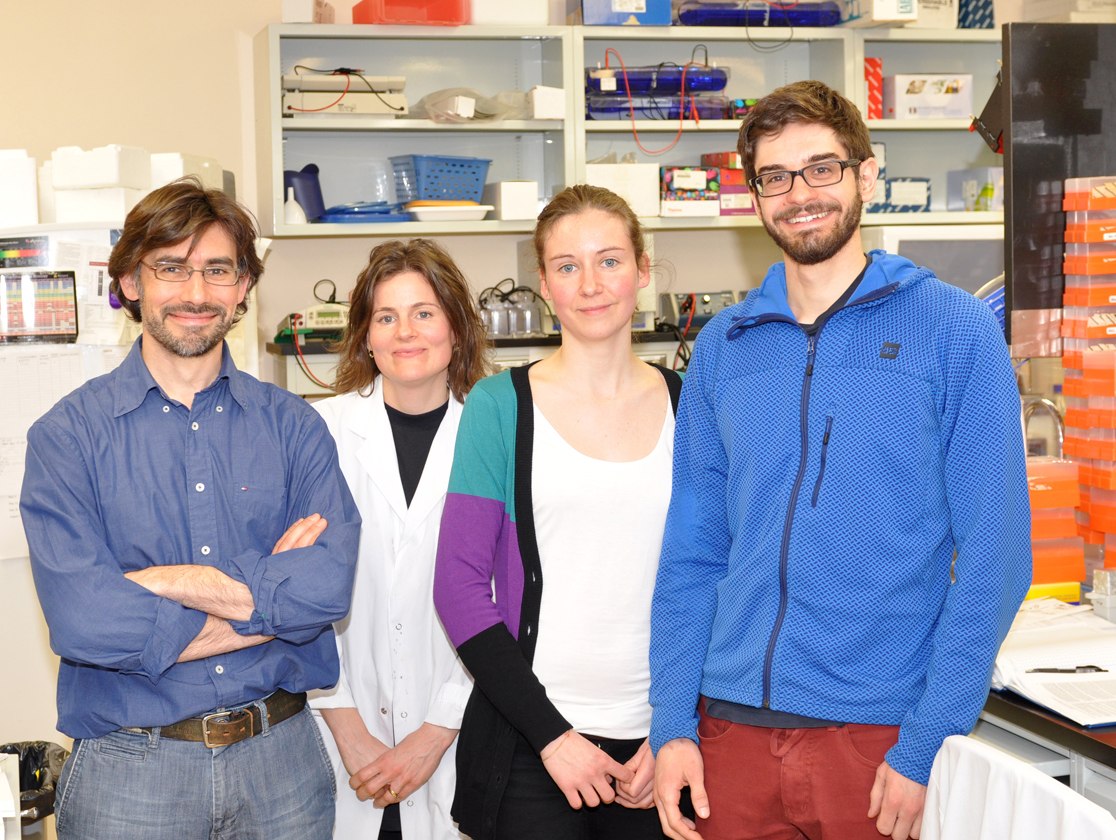
A new study by immunology researchers at the IRCM led by Javier M. Di Noia, PhD, (Adjunct Professor in the Department of Medicine (Division of Experimental Medicine) at McGill University), sheds light on a mechanism affecting AID, a crucial enzyme for the immune response. The scientific breakthrough, published in the latest issue ofThe Journal of Experimental Medicine, could eventually improve the way we treat the common flu, as well as lymphoma and leukemia.
The researchers study white blood cells, called B-lymphocytes, whose main function is to produce antibodies to fight against infections. More specifically, they focus on an enzyme found in B cells known as AID, or activation-induced deaminase.
“AID is crucial for an efficient antibody response,” explains Dr. Di Noia, Director of the Mechanisms of Genetic Diversity research unit at the IRCM. “However, high levels of AID can also have harmful effects and lead to certain cancer-causing mutations. The objective is to find the perfect level of AID activity to maximise the protection it provides to the body while reducing the risk of damage it can cause to cells.”
April 20, 2015